Skipped to main content

What to wear to a job interview: A guide to dressing for success

Smiling female job candidate in a black blazer and yellow top shaking hands with an interviewer across a desk.

Key takeways

If you’re wondering what to wear to a job interview, a little preparation can help you feel more confident and ready for the day. 

The right outfit doesn’t have to be expensive or complicated. It just needs to feel professional, comfortable, and appropriate for the role. 

Here are a few simple tips to keep in mind:

  • Research the company’s dress style by checking their website or social media. This can help you decide what to wear to interview in that workplace. 

  • Choose an outfit that suits the role and industry. Corporate jobs may expect more formal clothing, while other workplaces may prefer business casual. 

  • Keep your look neat and simple. Clean clothes, tidy hair, and minimal accessories usually work well for interviews.  

  • Try on your outfit before the interview so you know it fits well and feels comfortable. 

  • For virtual interviews, choose simple colours and check how your outfit looks on camera. 

Knowing what to wear to a job interview can help you feel prepared and confident before you even walk through the door.

Your interview outfit is one small part of showing an employer you’re ready for the opportunity. It can help create a positive first impression and show that you’ve taken the time to prepare.

In this guide, we’ll walk through what to wear to a job interview for different industries, along with simple tips to help you choose an outfit that feels right for you.


Why first impressions matter at job interviews


How quickly are first impressions formed?

Your interview often begins before the first question is asked. From the moment you arrive, whether that’s walking into the room or joining a video call, employers start getting a sense of who you are.

Things like your outfit, body language, and overall presentation can help shape that early impression. This doesn’t mean you need to look perfect. It simply means showing that you’ve taken time to prepare for the opportunity.

Everyone presents themselves differently, and that’s okay. What matters most is feeling comfortable, confident, and ready to focus on the conversation.

Choosing what to wear can help you feel more prepared and settle your nerves before the interview begins.


Why do first impressions matter in the hiring process?

First impressions can help set the tone for the rest of the interview. When you feel confident in how you present yourself, it can make it easier to focus on answering questions and sharing your skills.  

Employers are learning about your experience and how you might fit into their team. 

Your appearance is just one small part of that. Your attitude, communication, and willingness to learn are often just as important, if not more so.

Taking a few simple steps to prepare, including deciding what to wear to a job interview, can help you start the conversation on a positive note.


The psychology behind interview attire

Clothing can influence how people perceive one another, especially in professional settings. When you choose an outfit that looks neat and appropriate for the workplace, it can show that you’ve prepared for the interview and understand the environment. 

Just as importantly, wearing something that feels comfortable and authentic to you can boost your confidence. 

Remember, there is no single “perfect” interview outfit. Different workplaces have different expectations, and personal style, cultural background, or accessibility needs may shape what feels right for you. 

The goal is not to change who you are, but to choose clothing that helps you feel prepared and able to focus on showing your strengths.


Research Before You Choose Your Interview Outfit

If you’re unsure, a little research can help you feel more confident. Taking a few minutes to learn about the company can give you helpful clues about their workplace style and expectations. 

Remember: You don’t need to get it perfect. The goal is simply to choose an outfit that feels appropriate for the role and comfortable for you.


Start by researching the company dress code

One of the easiest ways to decide what to wear to a job interview is to look at how employees usually dress.

Start with the company’s website. Pages such as “About us” or “Our team” often include photos of staff. These can give you a sense of whether the workplace is more formal or relaxed.

Social media can also help. Platforms like LinkedIn, Facebook, or Instagram sometimes show everyday office life, team events, or workplace culture. 

If the interview is in person and you’re nearby, simply observing how people dress when entering or leaving the workplace can also give you useful insight. 


Reaching out to HR or your recruiter

If you’re still unsure, it’s perfectly okay to ask. A recruiter or hiring manager can usually tell you what type of clothing is appropriate for the interview. 

You could ask a simple question like: “Is there a dress code for interviews, or what do people usually wear in the workplace?” 

This can help you prepare with confidence and avoid unnecessary stress before your interview. 

A young man in a white dress shirt and tie speaks animatedly during a job interview. He wears glasses and gestures with one hand while a recruiter, seen from behind, listens.

What to wear for a job interview

The right outfit usually depends on the role, industry, and workplace culture.  

The goal isn’t to change who you are. Instead, aim for clothing that looks neat, feels comfortable, and helps you feel confident during the conversation. 

Different workplaces have different expectations. Below are a few common interview dress styles. 


Business formal interview attire

Business formal is common in industries such as finance, law, corporate roles, or senior leadership positions.

Typical outfits might include:

  • A suit or tailored blazer with dress pants or a skirt

  • A collared shirt, blouse, or professional top

  • Neutral or classic colours such as navy, black, or grey

  • Closed-toe shoes such as dress shoes, flats, or low heels

  • Simple accessories or jewellery

Comfort and confidence matter. Choose clothing that fits well and allows you to move easily throughout the interview.   


Business casual interview outfit options

Business casual is common in many workplaces, including administration, healthcare, retail management, and logistics. 

Outfit ideas may include:

  • Dress pants, chinos, or a professional skirt

  • A blouse, collared shirt, knit top, or neat sweater

  • A blazer or cardigan for a polished look

  • Closed-toe flats, loafers, or dress shoes

This style is slightly more relaxed than business formal but should still look professional and tidy.


Smart casual interview outfit options 

Some workplaces, especially creative industries, hospitality, or start-ups, have a more relaxed dress culture.

For these interviews, you might wear:

  • Smart trousers or dark jeans with a neat shirt or blouse

  • A simple dress or skirt with a professional top

  • Clean, structured shoes such as loafers, boots, or flats

  • Minimal accessories

Even in relaxed workplaces, it’s usually a good idea to dress slightly more polished for an interview. 


What to wear to a virtual job interview

If your interview is online, the same general rules apply when deciding what to wear to a job interview.

A few additional tips can help you look clear and professional on camera:

  • Choose solid colours rather than busy patterns

  • Avoid clothing that blends into your background

  • Make sure your outfit looks tidy on camera

  • Test your camera and lighting before the interview

Though the interview is virtual, dressing in a way that feels professional can help you feel more confident and prepared.


What not to wear to a job interview

When deciding what to wear, aim for clothing that looks neat and appropriate for the workplace. Some items may appear too casual for an interview.

For example, you may want to avoid:

  • Athletic or gym clothing

  • Very distressed or ripped jeans

  • Flip-flops or very casual sandals

  • Clothing that is wrinkled, stained, or worn 

If you’re unsure, choose an outfit that feels slightly more polished than everyday clothing. The goal is simply to look prepared and feel confident during your interview.

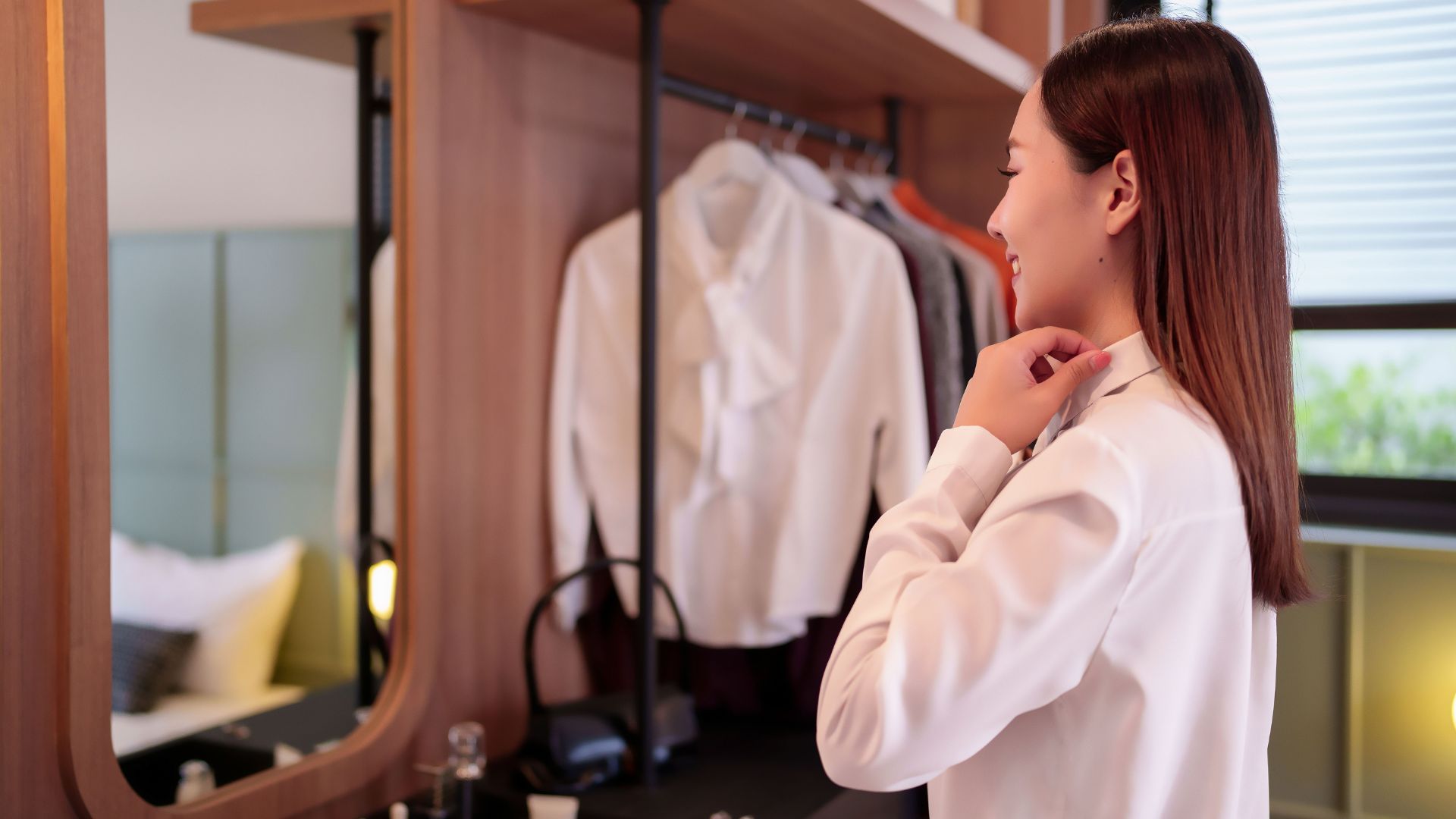
A woman with long brown hair smiles while adjusting the collar of her white button-down shirt in front of a mirror. She is standing in a modern, well-lit walk-in closet with clothes hanging on a rack behind her.

Preparing your job interview outfit

Once you’ve decided on an outfit, preparing it ahead of time can help reduce stress on the day. A little preparation can help you feel organised, confident, and ready to focus on the conversation. 


Try your outfit before the interview 

If possible, try on your full outfit a few days before the interview. This helps you check that everything fits well and feels comfortable to wear.

It’s also a good time to look for things like wrinkles, loose buttons, or stains. Preparing your outfit early means you won’t need to rush on the day of. 


Make sure your outfit fits and feels right 

Clothing that fits well and allows you to move easily can help you feel more confident during the interview. Choose clothing that feels comfortable for sitting, standing, or walking. 

If something feels restrictive or distracting, it may make it harder to focus during the conversation.


Keep your overall presentation neat 

Looking neat and prepared can help create a positive first impression.

This might include:

  • Wearing clean, wrinkle-free clothing

  • Choosing hairstyles or grooming that feel tidy and comfortable for you

  • Avoiding strong fragrances, as some people may have allergies or sensitivities

There is no single “right” way to present yourself. The most important thing is that your outfit helps you feel confident and ready to share your skills and experience.


Step into your next interview with confidence

Preparing what to wear to a job interview is one way to help you feel ready for the day. 

Remember, the goal isn’t to change who you are. It’s simply about presenting yourself in a way that feels appropriate for the role and helps you feel confident during the interview.

If you’re living with a disability, injury, or a health condition and need support with your job search, you don’t have to do it alone. 

Inclusive Employment Australia (IEA) at APM provides personalised support to help you prepare for interviews, explore job opportunities, and find work that suits your needs and goals.

If you’d like extra support, you can register with APM or call 1800 276 276 to speak with a team member about how Inclusive Employment Australia may be able to help.


FAQs

What should I wear to a job interview in a corporate environment? 

For many corporate interviews, business casual or business formal clothing works well. This might include tailored trousers or a skirt, a collared shirt or blouse, and closed-toe shoes. 

Adding a blazer can help create a more polished look. Neutral colours such as navy, grey, or black are common choices. Most importantly, choose clothing that looks neat, fits well, and helps you feel confident during the interview.


Is it acceptable to wear jeans to a job interview? 

In most cases, jeans are considered too casual for a job interview. Instead, you might choose dress trousers, chinos, a skirt, or a professional dress. 

Some workplaces have more relaxed dress codes, but it’s usually a good idea to choose something slightly more polished for the interview. 


Should I wear a full suit to every job interview? 

Not always. Some industries expect formal clothing, but many workplaces now have a business casual dress style. 

A neat outfit, such as dress trousers or a skirt paired with a collared shirt, blouse, or blazer, can work well for many interviews. 

When in doubt, dressing slightly more formally than everyday workplace clothing is usually a safe choice.


About this article

APM supports people with disability, injury, or a health condition through various programs and services across its businesses, including Inclusive Employment Australia in Australia.

The information contained in this article is for educational and informational purposes only and is not intended as health or medical advice. Always consult a physician or other qualified health provider regarding any questions you may have about a medical condition or health objectives.

When discussing disability, APM’s copy style is to use person-first language and the social model of disability in the first instance. Some articles may use identity-first language or refer to the medical model of disability for clarity or to better suit a specific audience.

If you have any questions or feedback about the content of this article, visit our Feedback page to get in touch or email support@apm.net.au